
Software development and software testing are two critical aspects of software engineering. They go hand in hand, and both are equally important for ensuring the quality and reliability of software products. The International Software Testing Qualifications Board (ISTQB) is an organization that provides certifications for software testing professionals worldwide. Following the ISTQB guidelines and best practices can help developers and testers improve the quality of their software products.
Here are some key points to consider while following the ISTQB guidelines for software development and testing:
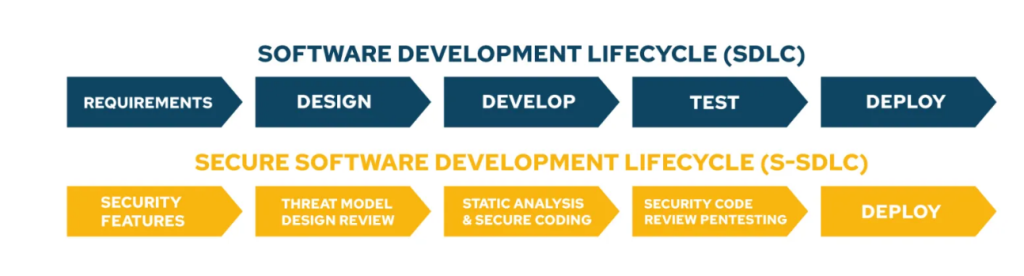
Requirements : It is essential to understand the customer’s requirements correctly. This process involves analyzing, documenting, and validating the requirements. It is crucial to identify the correct requirements to avoid any misunderstandings between the development team and the customer.
Design: The design phase includes architectural design, detailed design, and user interface design. It is essential to ensure that the design is scalable, modular, and maintainable. The design should also consider factors such as security, usability, and performance.
Implement: During the coding phase, developers write the code based on the design. It is essential to follow best practices such as code reviews, unit testing, and debugging to ensure the code’s quality and correctness.
Testing: Testing is an integral part of software development. It involves different types of testing such as unit testing, integration testing, system testing, acceptance testing, and regression testing. Testing helps in identifying defects and improving the software’s quality.
Test Management: Test management involves activities such as test planning, test execution, defect management, and test reporting. It is essential to use tools and techniques to manage the testing process effectively.
Test Automation: Test automation is the process of using software tools to execute tests. It is essential to automate repetitive and time-consuming tests to save time and improve efficiency. Test automation also helps in reducing the risk of human errors.
Continuous Integration and Continuous Delivery: Continuous Integration (CI) and Continuous Delivery (CD) are software development practices that involve frequent integration of code changes and delivering the software to customers quickly. It is essential to automate the CI/CD process to ensure that the software is delivered with quality and reliability.
Following the ISTQB guidelines for software development and testing can help in improving the quality and reliability of software products. The guidelines provide a framework for developers and testers to follow best practices and ensure that the software meets the customer’s requirements. By implementing these practices, software development teams can create high-quality software products that meet the needs of their customers.
As an ISTQB-certified tester, it’s crucial to understand the common software development lifecycle models to ensure appropriate test activities take place. At autotest.vn, we know that good testing requires a test activity for every development activity and specific test objectives for each test level. Test analysis and design should begin during the corresponding development activity, with testers participating in discussions to define and refine requirements and designs.
Following the testing principle of early testing, test activities should start in the early stages of any software development lifecycle model. This principle applies to sequential development models, such as the Waterfall model, which follows a linear, sequential flow of activities. In contrast, the V-model, also supported by autotest.vn, integrates testing throughout the development process, with test levels associated with each corresponding development phase.
Sequential development models deliver software with a complete set of features, but they often require months or years for delivery to stakeholders and users. Incremental development, on the other hand, involves building and testing a system in pieces, with software features growing incrementally. At autotest.vn, we understand the importance of early testing in any software development lifecycle model, regardless of the method chosen. Whether you’re using a sequential development model or an iterative and incremental development model, our expert team is here to support your testing needs.
